Monthly Archives: February 2017

About Stones: Emerald

emerald

Astrological Sign: Taurus, Gemini, Aries
Chakra: Heart
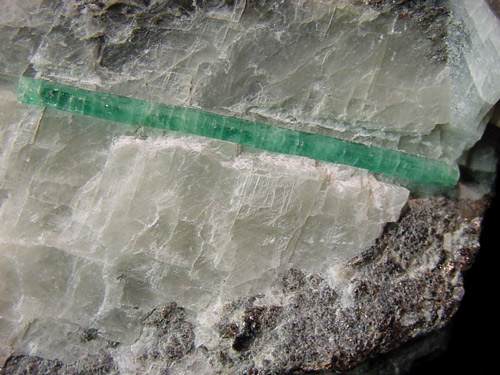
Lore: Known as the stone of successful love, emerald supports sensitivity, loyalty and domestic bliss. It brings harmony to all areas of life, quieting the emotions and opening the heart. Emeralds help maintain rhythmic breathing for meditation. They bring a beneficial outcome to legal matters.
Geology: Emerald is a green beryl colored by chromium. They have been treasured since the time of Cleopatra. The most famous mines are those of Colombia. Emeralds of various localities can be recognized by their inclusions.
Localities: Colombia, Brazil, North Carolina, Russia

About Stones: Dalmation Stone

dalmation

Astrological Sign: Gemini
Chakra: Heart
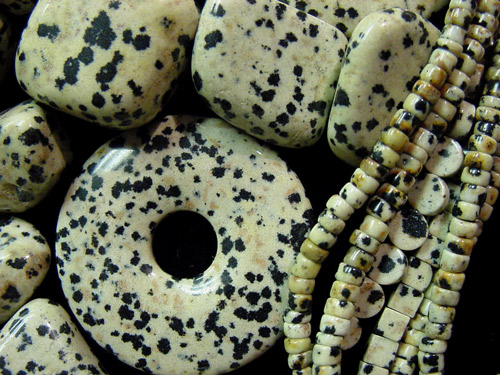
Lore: Dalmatian stone encourages playfulness and strengthens our lighter side. A good stone to share in relationships, it supports constancy, fidelity and devotion. It helps us disengage from outmoded behavior patterns. It is useful in the calming of animals.
Geology: Dalmatian stone is massive tan quartz microcline containing black tourmaline of volcanic origin scattered throughout. It was named based on its resemblance to a dalmatian’s fur.
Locality: Mexico

About Stones: Crazy Lace Agate

CrazyLace3

Astrological Sign: Aries
Chakra: Root, Solar Plexus
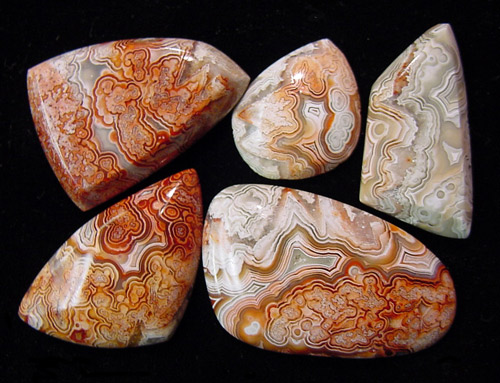
Lore: Crazy lace agate helps us to reach extremely high physical levels. Use to help recover from bio-rhythmic lows. It encourages laughter and provides insight into the many paths leading to awareness.
Geology: Crazy Lace Agate, or Mexican Lace Agate, is a variegated form of chalcedony displaying lace configurations or paisley patterns in a combination of red, white, gray and yellow.
Locality: Mexico

About Stones: Cobaltocalcite

cobalcal

Astrological Sign: Leo
Chakra: Brow, Crown, Heart
Lore: Cobaltocalcite is also known as sphaerocobaltite. It is used to enhance the peak of creative endeavors, supporting the realization that all things are possible. A gift of love, it helps in the formation of friendships.
Geology: Cobaltocalcite is a carbonate which occurs in a deep “hot pink” color as crusts and small crystals in cobalt ore locations. It is often found associated with malachite and dolomite. 
Locality: Zaire, Germany

About Stones: Cowrie Shell

cowrie

Astrological Sign: Pisces
Chakra: Sacral
Lore: The cowrie shell is an ancient symbol for creation, birth, and re-birth. It can help us actualize a spiritual re-awakening. Used for manifestation, it will bring good fortune and affluence. The cowrie can inspire the creativity of excellence. They are a favorite element of female adornment in the African culture, and are a symbol of power in the Fiji and Solomon Islands.
Biology: Cowries are snails in the family Cypraeidae. There are over 250 known living species.
Locality: Warm seas

About Stones: Copper

copper

Astrological Sign: Taurus, Sagittarius
Chakra: Root, Sacral
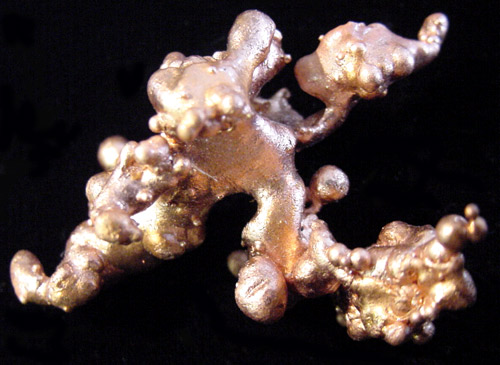
Lore: Copper stimulates initiative, optimism, diplomacy, and independence. It can magnify the transfer of energy from other minerals or from a healer due to its ability to conduct electrical impulses. It is reputed to bring luck, especially in the recovery of property.
Geology: Copper is a native element forming in volcanic rocks and sulfide deposits. The usual habits are dendritic and massive, rarely crystaline in the form of cubes and octahedrons. Michigan’s native copper is used to form these interesting sculptures which are man made on the Keweenaw Peninsula. Molten copper at 2200 degrees Fahrenheit is poured into straw which is immersed in water. The straw is burned away and the copper solidifies. On New Years day, according to custom, early miners used lead in the same process as a method of fortune telling. Good or bad luck for the year to follow was determined by the shape and size of the sculpture formed.
Localities: Michigan, Arizona, Germany

About Stones: Chrysocolla

Chrysocolla

Astrological Sign: Gemini, Virgo, Taurus
Chakra: Throat, Heart
Lore: Chrysocolla eases emotional heartache and increases our capacity to love. Native American tribes used it as a healing stone for calming upset feelings. It helps re-build relationships and is purifying to the home and the environment.
Geology: Chrysocolla is formed in the oxidation zone of copper ore minerals where surface water containing acid dissolves copper out of the rock. A type of chrysocolla mined in Israel, called Eilat stone, is intergrown with turquoise and malachite.
Localities: Peru, Chile, Arizona, Nevada, Israel

About Stones: Chiastolite

chiastolite

Astrological Sign: Libra
Chakra: Throat, Heart
Lore: Chiastolite gives us persistance in realizing our identity and our life’s task. It enhances conscious awareness and is used as a sign of devotion. Chiastolite calms fears, nervousness, and feelings of guilt.
Geology: Chiastolite is a form of andalusite occuring in the shape of long prisms within carbonaceous clay slates. Growth occurs in layers with carbon deposited along the crystal edges as diagonal cruciform shapes are formed. It is also known as cross-stone.
Localities: Massachusetts, China

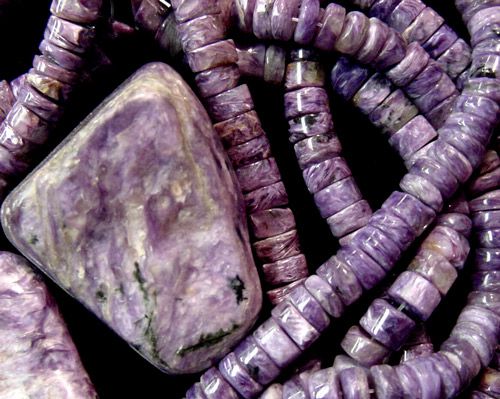
About Stones: Charoite

charoite

Astrological Sign: Sagittarius, Scorpio
Chakra: Heart, Crown
Lore: Charoite brings spiritual truths to dispell illusions and worst fears. It helps us to cope with profound changes.
Geology: Charoite originates from Siberia where it was first discovered in 1978. Occurring as violet masses, charoite is formed in the zone of contact between magmatic and metamorphic rocks from the combination of alkaline magmatic solutions with mineral-forming substances of the surrounding rocks.
Locality: Russia

About Stones: Carborundum

carborundum

Astrological Sign: Capricorn
Chakra: All
Lore: The silicon content in laboratory produced carborundum has similar properties to that of natural quartz. It has been employed for memory enhancement and to improve manual dexterity. Use to amplify positive feelings.
Geology: Carborundum, or silicon carbide is a man-made mineral invented in Pennsylvania by Edward Goodrich Acheson in 1890. The result of a failed attempt to create diamonds, carborundum was formed from electrically fusing a mixture of clay and carbon. Carborundum, used as an industrial abrasive, is hard enough to scratch glass. More recently it has been employed as a semiconductor. Silicon carbide, found in Arizona within a Canyon Diablo meteorite by Dr. Ferdinand Henri Moissan, has been named Moissanite. With a tetrahedral crystalline structure and an appearance similar to diamond, naturally occurring moissanite is rare. Gem quality moissanite is being manufactured and sold as a low cost alternative to natural diamonds.
Locality: Man made in Poland